Do You Need a Permit to Film a Corporate Video in India?
Most corporate shoots in India need far less paperwork than overseas producers expect. A few need much more. Here is how to tell the difference.

Most corporate shoots in India need far less paperwork than overseas producers expect. A few need much more. Here is how to tell the difference.
The short answer
For most corporate video shot in India, you need far less paperwork than you are probably expecting. For a small number of situations, you need considerably more, and those are the ones that will wreck your schedule if you find out about them late.
The dividing line is not what kind of film you are making. It is where you point the camera, and who owns the ground you are standing on.
I get asked this a lot by producers in the US, the UK and Europe who are planning their first India shoot, usually a few weeks before they were hoping to travel. So this is the answer I would give on a call, written down.
I should say clearly at the top that I am a filmmaker and not a lawyer, and that Indian filming rules vary by state, by city and sometimes by the individual in charge of a location on the day. Treat this as practical experience rather than legal advice, and treat the government links as the authority.
If you are filming inside your own offices, you are mostly fine
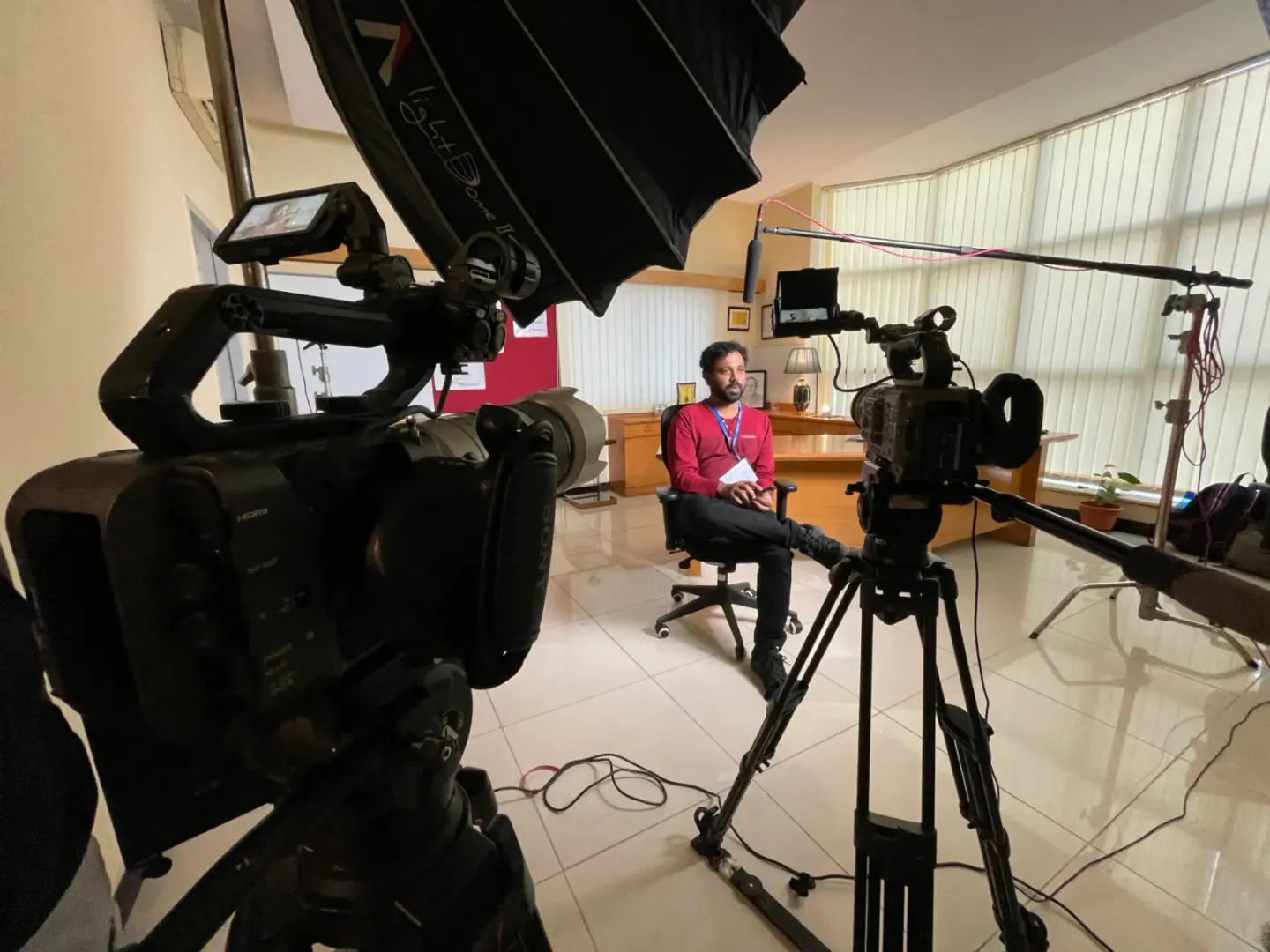
The majority of corporate work I shoot for international clients happens on private property. A company's own office, its own factory, a hotel meeting room the client has booked, a studio.
On private property, the permission that matters is the property owner's permission. If your India team owns or leases the building, that is generally the whole conversation. No government filming permit is involved in a standard interview and B-roll day inside your own premises.
This covers a great deal of what global brands actually want. Employee interviews, founder and executive interviews, customer testimonials, office B-roll, product and process footage on a factory floor, internal event coverage.
What does still need attention on private property is internal rather than legal. Building management and facilities will want notice. Security will want a list of people and equipment, often days ahead, and they will care about tripods and anything that looks like a rig. If the building is shared, the landlord may have rules that the tenant does not control. In factories and labs there will be safety induction, and there may be areas where cameras are genuinely not permitted for reasons that have nothing to do with film law.
None of that is hard. All of it takes longer than people budget for, and it is worth asking about three weeks out rather than three days out.
Public places are where it changes
The moment you step outside the client's property, it becomes a different question, and the answer depends on the city and the specific location.
There is no single national permit that covers filming on an Indian street. Permissions sit with state governments, city police, municipal bodies and individual location authorities, and they do not work the same way in Mumbai as they do in Bengaluru or Kochi. Most states run a film office or a single window cell, and the practical route is to go through whichever body actually controls the location.
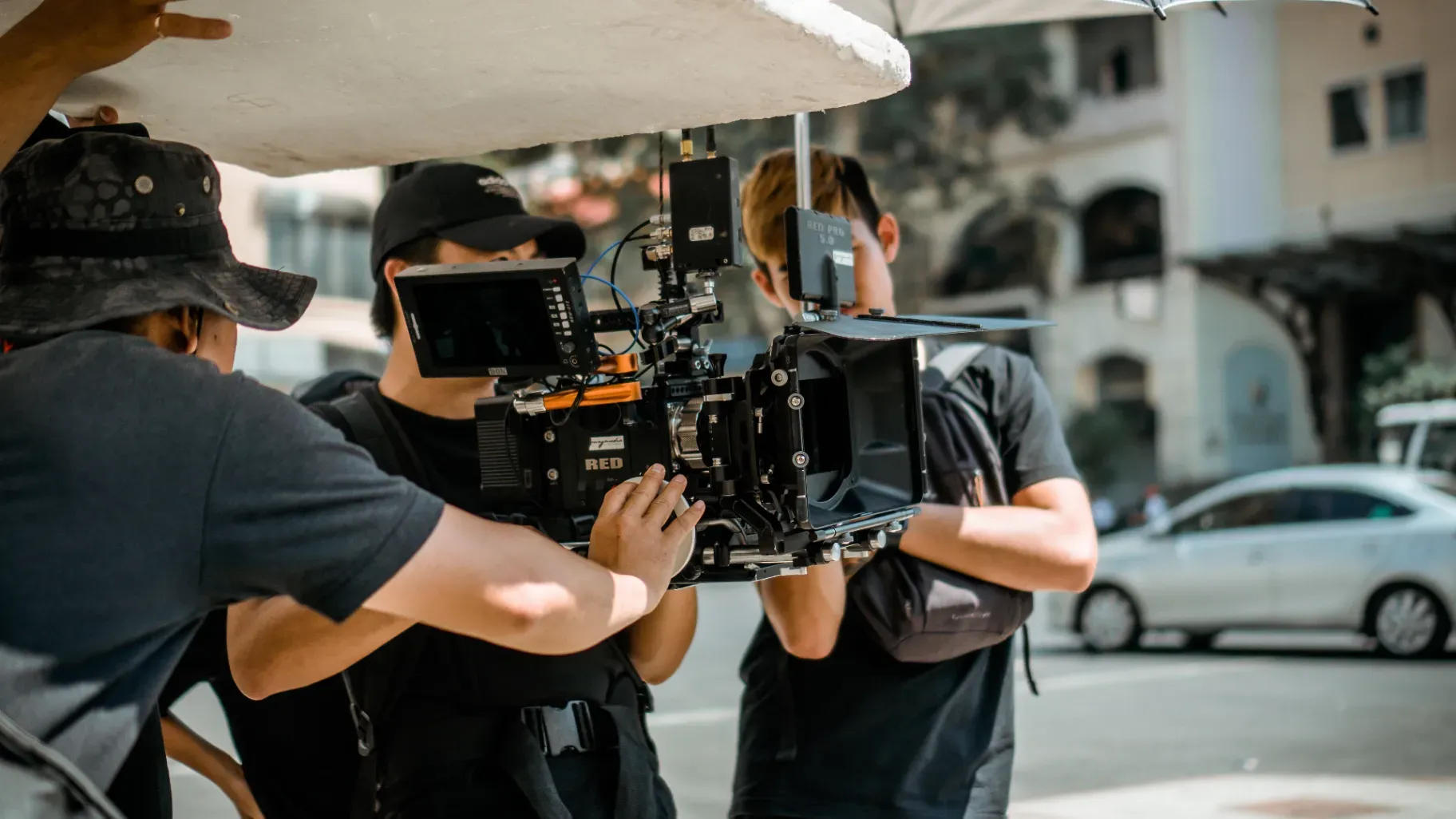
In real terms, a lot of small scale corporate work outdoors passes without incident. One person with a small camera filming a wide shot of a skyline is not what these systems were built for. But "it usually passes" is not the same as "it is permitted", and I am not going to advise a client to rely on it. If a shoot involves a crew, a tripod, lighting, talent in wardrobe, or blocking any part of a footpath, get it cleared. The cost of a permission is almost always less than the cost of a stopped shoot.
I also want to be honest about something. If a shoot is stopped in a public place, the person who carries that is usually the local crew rather than the visiting client, and I think that is worth knowing when you are deciding how carefully to do this.
The locations that catch people out
Some categories reliably need real permissions and real lead time. If any of these are on your list, raise them at the first planning call rather than the last.
Monuments and heritage sites. Anything protected by the Archaeological Survey of India has its own permission process and its own fee structure, and commercial filming is treated very differently from a tourist with a phone.
Railways and metro systems. Stations and trains are controlled by the relevant railway or metro authority. This is a common request for corporate films because stations look wonderful, and it is a common surprise because it is not quick.
Airports. This is a separate process from everything else in this article and it is the one most often discovered too late. See the section below.
Government buildings, ports, defence adjacent areas. Assume no unless someone with authority has said yes in writing.
Protected forests and wildlife areas. Separate forest department permissions, separate fees, and rules about what you may carry.
Airports and airspace: the two month problem
If your shoot involves an airport, or a drone, the timeline changes completely, and these are two different applications that people frequently confuse.
India's official film facilitation portal states plainly:
"For filming at Airports / Aerial Filming permission, kindly apply at least two (2) months prior to the day of the shoot."
The two routes are separate. Filming on the ground at an airport goes through the DGCA's eGCA portal, with the purpose stated as Ground Photography. Aerial and drone work goes through the DGCA's Digital Sky platform. They are different systems and one does not cover the other.
I want to add a qualification here, because the two month line gets repeated by people who have not read what it applies to. That advisory is aimed at airport and controlled airspace work. It is not a blanket legal minimum for every drone shot in India.
Under the Drone Rules 2021, airspace is mapped into green, yellow and red zones. In a green zone, below 400 feet, a registered drone with a valid unique identification number does not require prior flight permission. Yellow zone clearances through Digital Sky are frequently turned around in a day or two. Red zones and anything near an airport are a different matter entirely.
So the practical answer for a typical corporate rooftop or campus drone shot in a green zone is that it is far easier than the two month figure suggests. The practical answer for anything near an airport is that you should have started already.
One more thing worth flagging. The Ministry of Civil Aviation has published a draft Civil Drone (Promotion and Regulation) Bill 2025 which would replace the Drone Rules 2021. As of the date on this article it remains a draft and the existing Digital Sky pathway stands, but this is an area to re-check rather than assume.
What I actually do before a shoot
In order, roughly three to four weeks out:
Ask what is on the shot list that is not on the client's own property. That question alone surfaces most of the risk.
For anything on private premises, start the facilities and security conversation immediately, because it is slow and unglamorous and nobody remembers to do it.
For anything public, identify who actually controls the location. Not who you think should, but who does.
For drones, check the zone before promising the shot. I would rather tell a client in week one that an aerial is not realistic than in week four.
For airports, monuments, railways or forests, treat the permission as the long pole in the schedule and plan the rest around it.
Keep a copy of every approval on the phone and on paper on the day. Someone will ask.
The part that is not paperwork
Something I have learned filming in India that does not appear in any official process: a lot of what determines whether a shoot goes smoothly is how you treat the people at the location.
The security guard at the gate, the building manager, the station master, the person who runs the canteen. None of them issued your permit and all of them can make your day difficult or easy. Turning up early, explaining what you are doing in plain language, showing them the paperwork before being asked, and not treating them as an obstacle is worth more than any amount of pre production.
I do not offer that as a substitute for permissions. I offer it because I have watched shoots with perfect paperwork go badly because the crew was rude, and shoots with modest paperwork go beautifully because someone took ten minutes to be human at the gate.
So, do you need a permit?
If you are filming inside your own offices or a booked private space, almost certainly not. Get your internal approvals early and you will be fine.
If you are filming in public, it depends on the city and the scale, and you should ask rather than assume.
If you are filming at an airport, at a monument, on the railways, in a forest, or with a drone anywhere near controlled airspace, yes, and you need to start now rather than soon.
The most useful thing an overseas producer can do is raise the location list early. Almost every India shoot that gets into trouble does so because somebody found out in week four about something that needed six weeks.
One last thing worth saying, because it is the question that usually follows this one. None of this requires you to be in the country. Most of the corporate work I shoot for overseas clients happens without anyone from their side travelling, and permissions are part of what you are hiring a local crew to absorb.
Common questions
Do you need a permit to film a corporate video in India?
For most corporate work, no. Filming inside your own office or a private space you have booked needs the property owner's permission and your own internal approvals, not a government filming permit. Permits become necessary once you film in public places, and they become slow once you film at monuments, on railways, at airports, in forests or with a drone in controlled airspace.
Can you film inside an office in India without a permit?
Yes, in the ordinary case. On private property the permission that matters is the property owner's. What still takes time is internal: building management, facilities and security, plus safety induction in factories and labs. Start that three weeks out rather than three days out.
Do you need permission to film in a public place in India?
It depends on the city and the scale, and there is no single national permit. Permissions sit with state governments, city police, municipal bodies and individual location authorities. Small scale work often passes without incident, but if your shoot involves a crew, a tripod, lighting, talent in wardrobe or any obstruction of a footpath, get it cleared.
How long does drone permission take in India?
It depends entirely on the zone. Under the Drone Rules 2021, a registered drone flying below 400 feet in a green zone does not need prior flight permission. Yellow zone clearances through Digital Sky are often turned around in a day or two. Anything near an airport or in controlled airspace is where the two month advisory applies.
How far ahead should I apply to film at an Indian airport?
India's official film facilitation portal advises applying at least two months before the shoot for filming at airports and for aerial filming. Ground filming at an airport goes through the DGCA's eGCA portal with the purpose stated as Ground Photography, which is a separate application from drone work on Digital Sky.
Which locations in India need the longest lead time?
Airports, Archaeological Survey of India monuments, railway and metro property, protected forests and wildlife areas, and anything government, port or defence adjacent. If any of those are on your shot list, treat the permission as the longest pole in the schedule.
Mayur Srivatsav is a corporate filmmaker and cinematographer based in Bengaluru, working with global brands and the agencies that serve them on shoots across India. If you are planning an India shoot and want a straight answer about what it will take, get in touch.
Sources: India Cine Hub, Ministry of Information and Broadcasting · DGCA Digital Sky · DGCA eGCA portal